
Shelter in a Storm
Tri-City Tales Issue No. 40
Tammy Miller, the director of Tri-City Animal Shelter, knows what happens when you underestimate the power of a storm. Twenty years ago, she spent weeks sleeping on an Army cot in south Louisiana, helping with injured and displaced animals from Hurricane Katrina. So last month, when city officials began alerting her to an upcoming ice storm, she left nothing to chance.
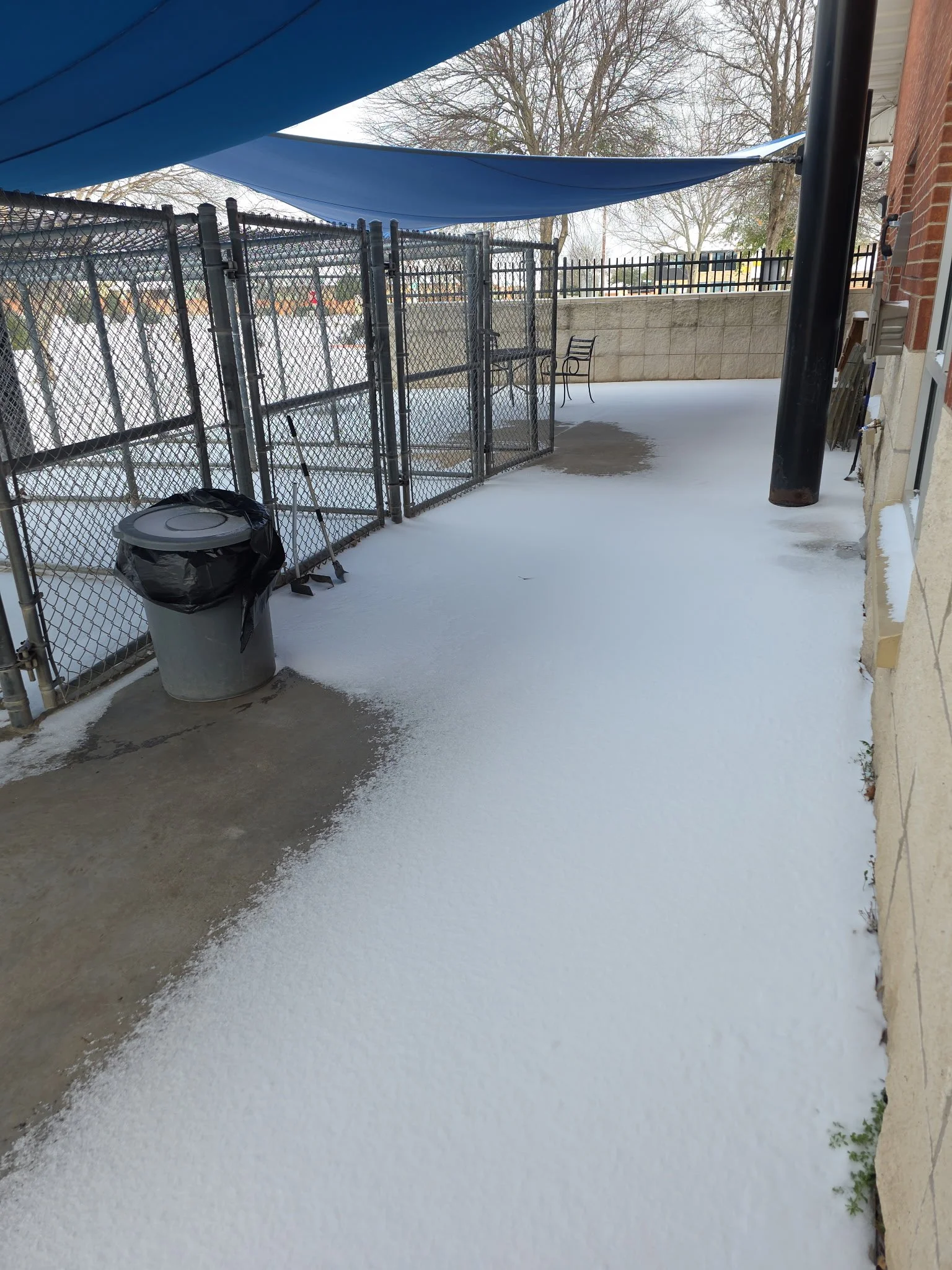
Part of the storm preparation is built in. The shelter is attached to a critical power grid, which lessens the chance of an outage. The pipes are outfitted with protections to help keep them from freezing. Days before the storm, the staff also began stocking up on food and water—including food for themselves—should they get stuck. They collected extra blankets and newspapers in case the washing machine froze. They parked empty adoption vans at city warming stations, so families with power outages would have a place for their pets.
There’s no set formula, though, to how much prep is needed before bad weather. “It’s more based on, ‘Tammy’s got a hunch,’” she says.
The snow and ice arrived Friday night, January 23. The next morning, staff member Marlinda Humphery made her way down icy streets as soon as she got up. A mom of three, she had to make special arrangements for her family, and explain to her children why she was leaving on a snow day. “I’m going to do everything I can to get to there,” she says. “There’s nothing like the wagging of those tails when you walk in.” On Sunday, a member of the city parks department picked Marlinda up in a city vehicle better equipped for the icy streets. She never missed a day.
Tammy Miller, who lives in another county, wasn’t driving at all. She brought an air mattress to work on Friday and stayed for three days. (Thanks to Friends of Tri-City donors, the new wing of the Lifesaving and Learning Center has showers and a mini-kitchen.) During the day, the staff let animals out as they could—to the thrill of the huskies awaiting adoption —but also turned a conference room into a temporary indoor play yard. In the evenings, after the dogs and cats were taken care of, Miller passed the time checking on things at home and watching Bonanza reruns on her computer.
The shelter itself was closed, but one night Miller saw headlight beams in the parking lot. A woman had found a Bassett hound out in the cold and made her way to the shelter. “She saw me in my pajama pants,” Miller said, “But I was glad I was here.”